Keep the contents clearly visible
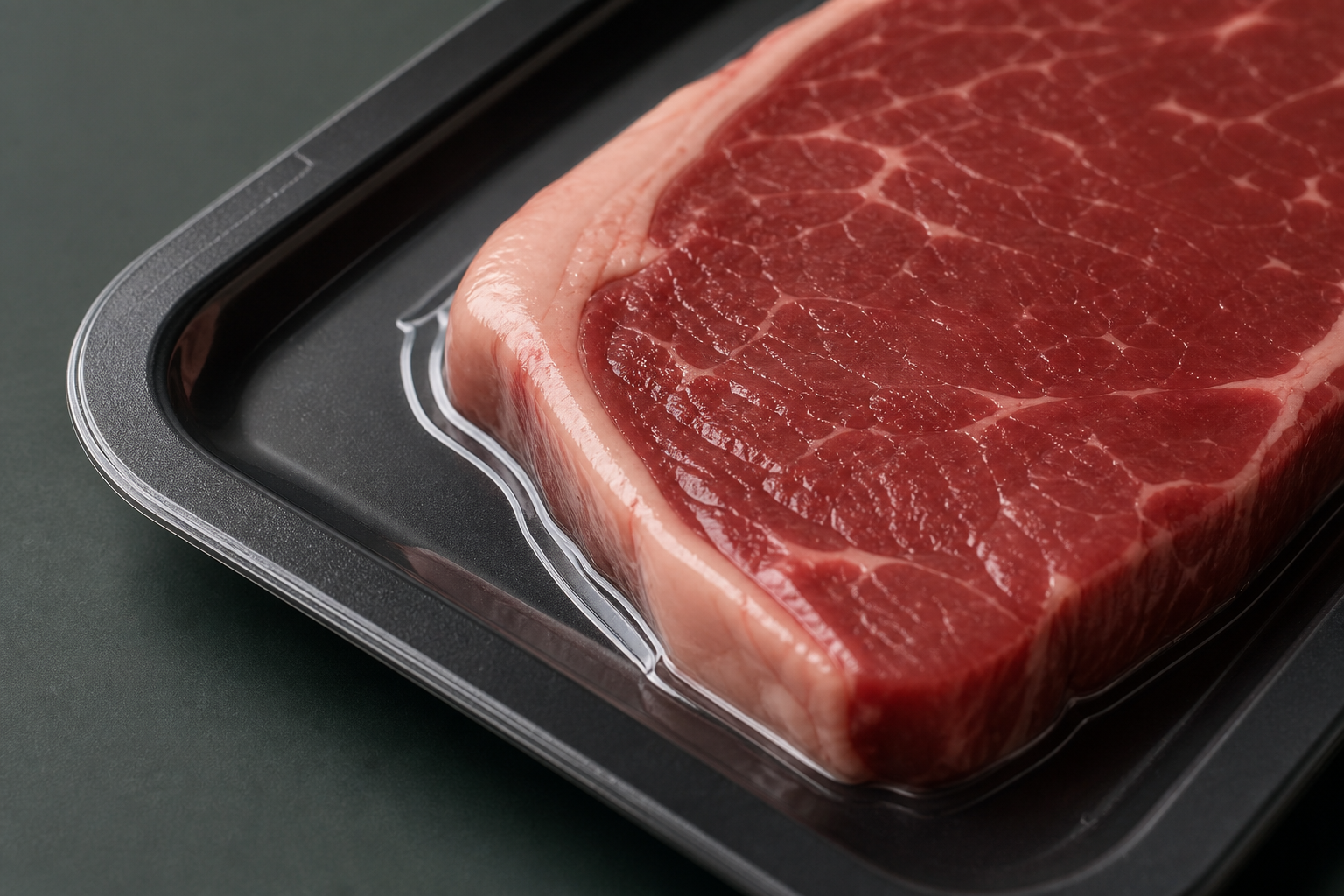
The transparent film follows the product shape and reduces excess space, making the food easier to inspect.

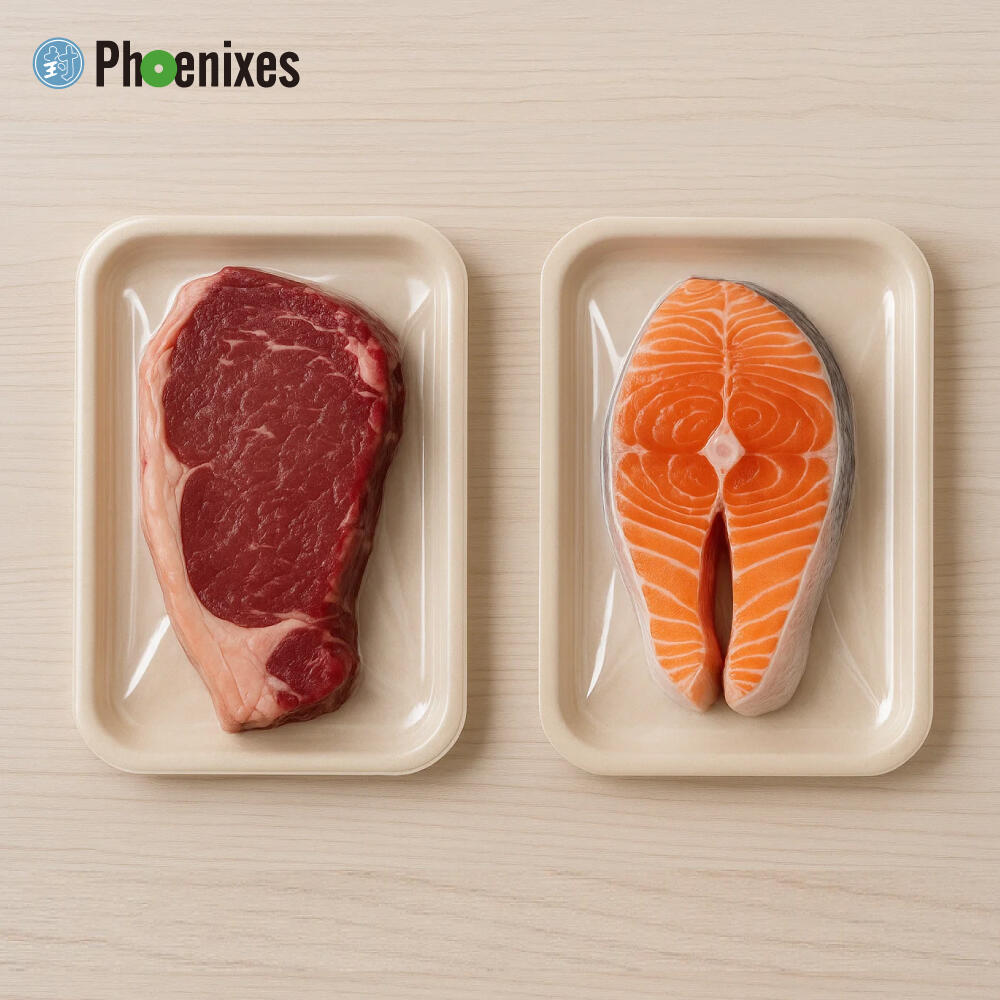
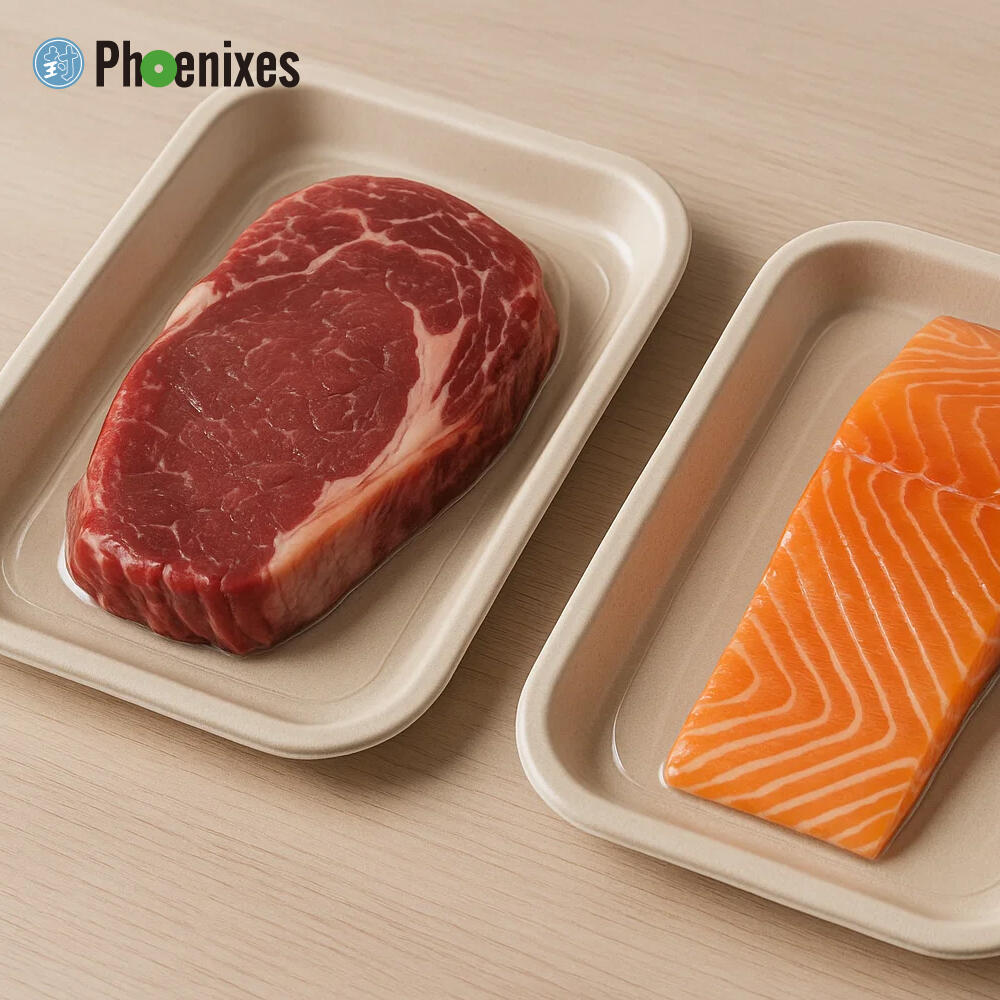
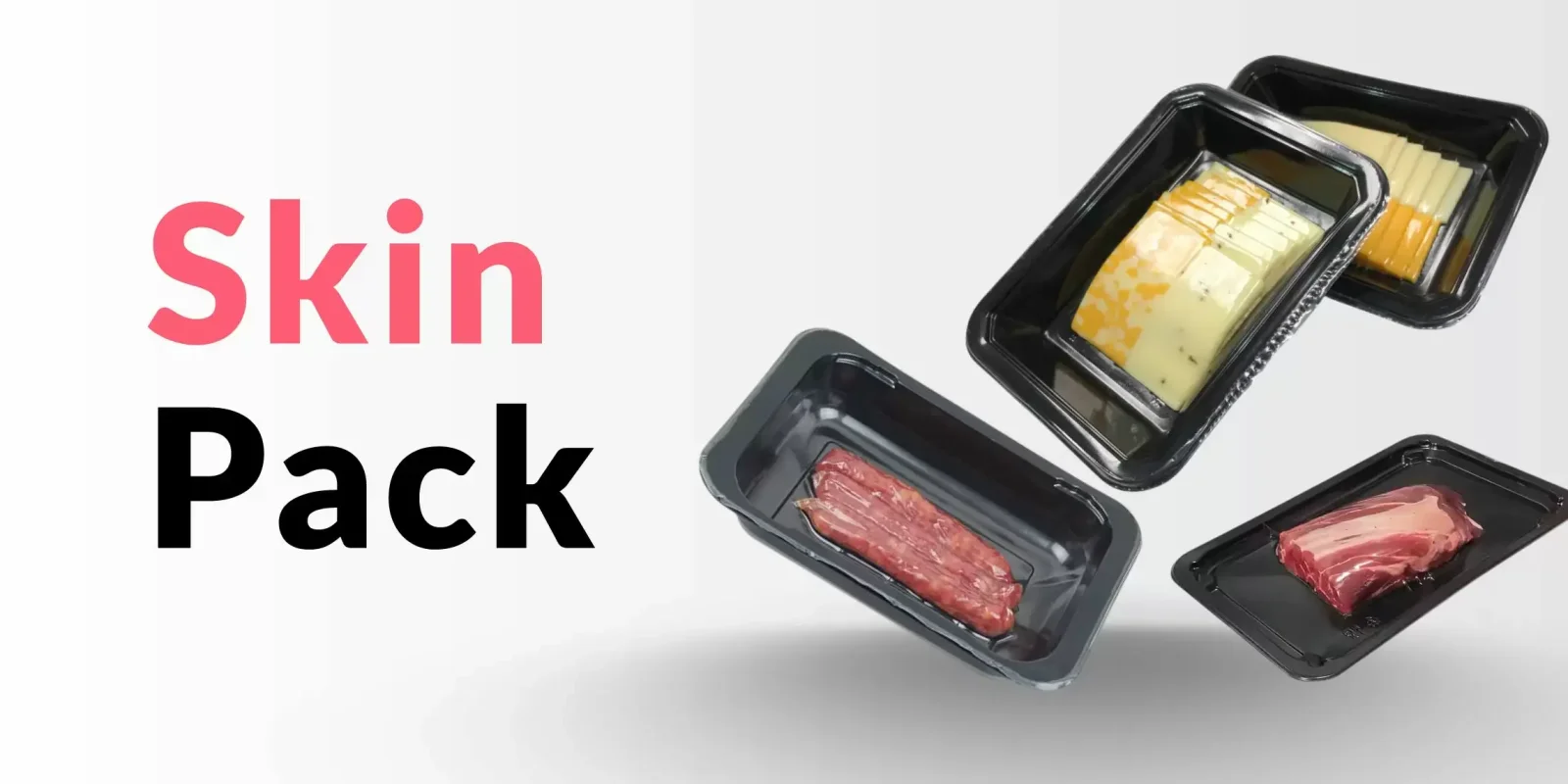
Vacuum skin packaging (Skin Pack) forms a transparent film closely around the food and container, making chilled or frozen meat, seafood, and prepared foods easy to see while helping keep the product in position.
It is not a film-only decision. Container material, product height, film barrier, storage temperature, and heating needs must be reviewed together; we recommend testing with actual samples and target conditions.
SKIN PACK | VACUUM SKIN PACKAGING
Skin Pack uses vacuum forming to draw a transparent film closely around the food and container. The shape of meat, seafood, and prepared foods remains clearly visible, while the package helps keep the product in position.
Send samples and requirements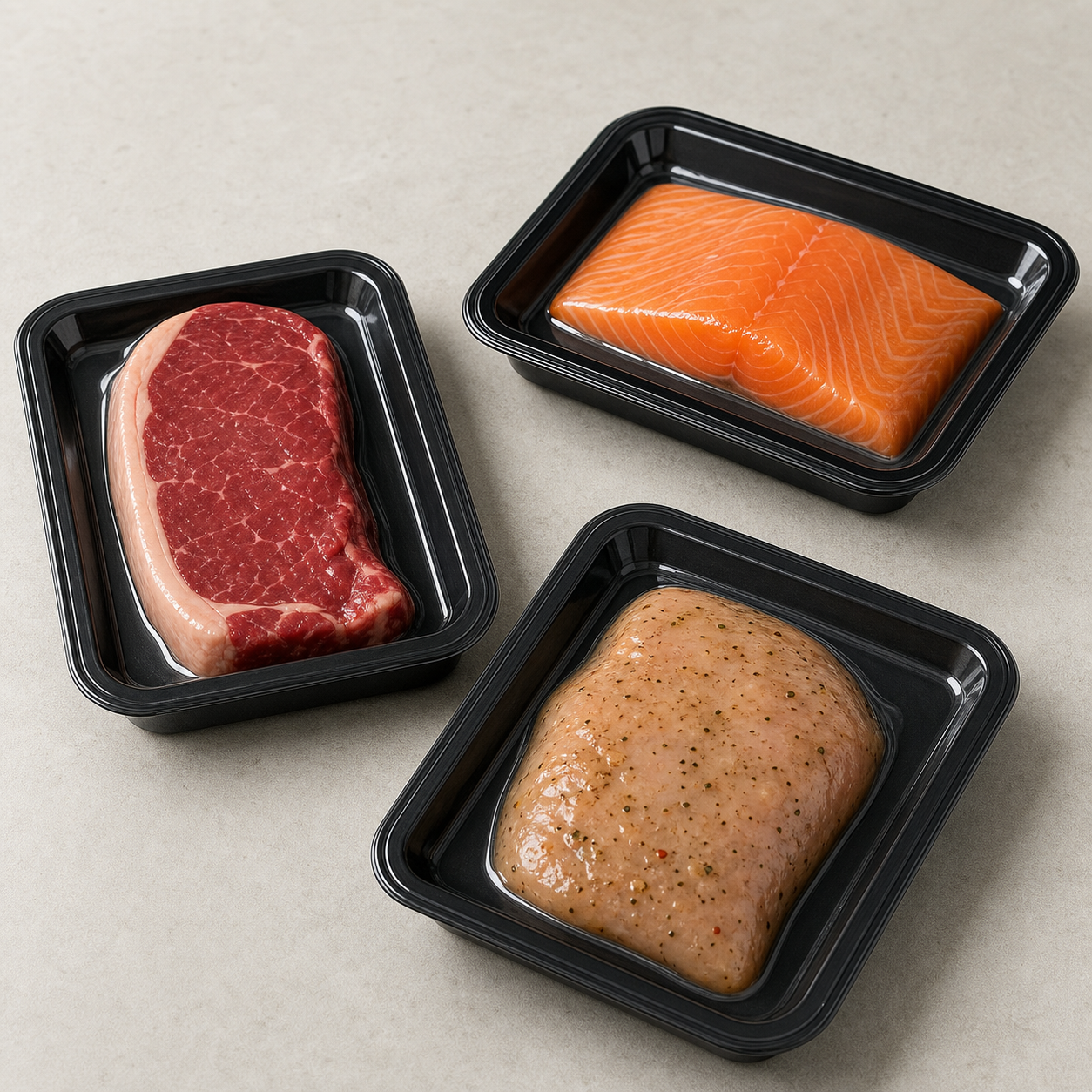
ONE POINT TO CLARIFY FIRST
For the film to form and seal properly while meeting storage and heating needs, the food, container, film, and use conditions must be reviewed together. Missing information can make a test result misleading.
PACKAGING QUESTIONS IT HELPS ADDRESS
The value of Skin Pack is not a blanket claim of longer shelf life. It is a testable combination of presentation, barrier performance, and actual use conditions.
The transparent film follows the product shape and reduces excess space, making the food easier to inspect.
Skin forming helps maintain the relative position of the food and container for a neater appearance during transport and display.
High-barrier film can be considered according to the food and storage goal; actual shelf life still requires sealing and storage tests.
COMMON APPLICATIONS
Verified application directions include chilled or frozen meat, seafood, and prepared foods. Products with bones, sharp edges, high oil content, or large height differences should be tested with actual samples first.
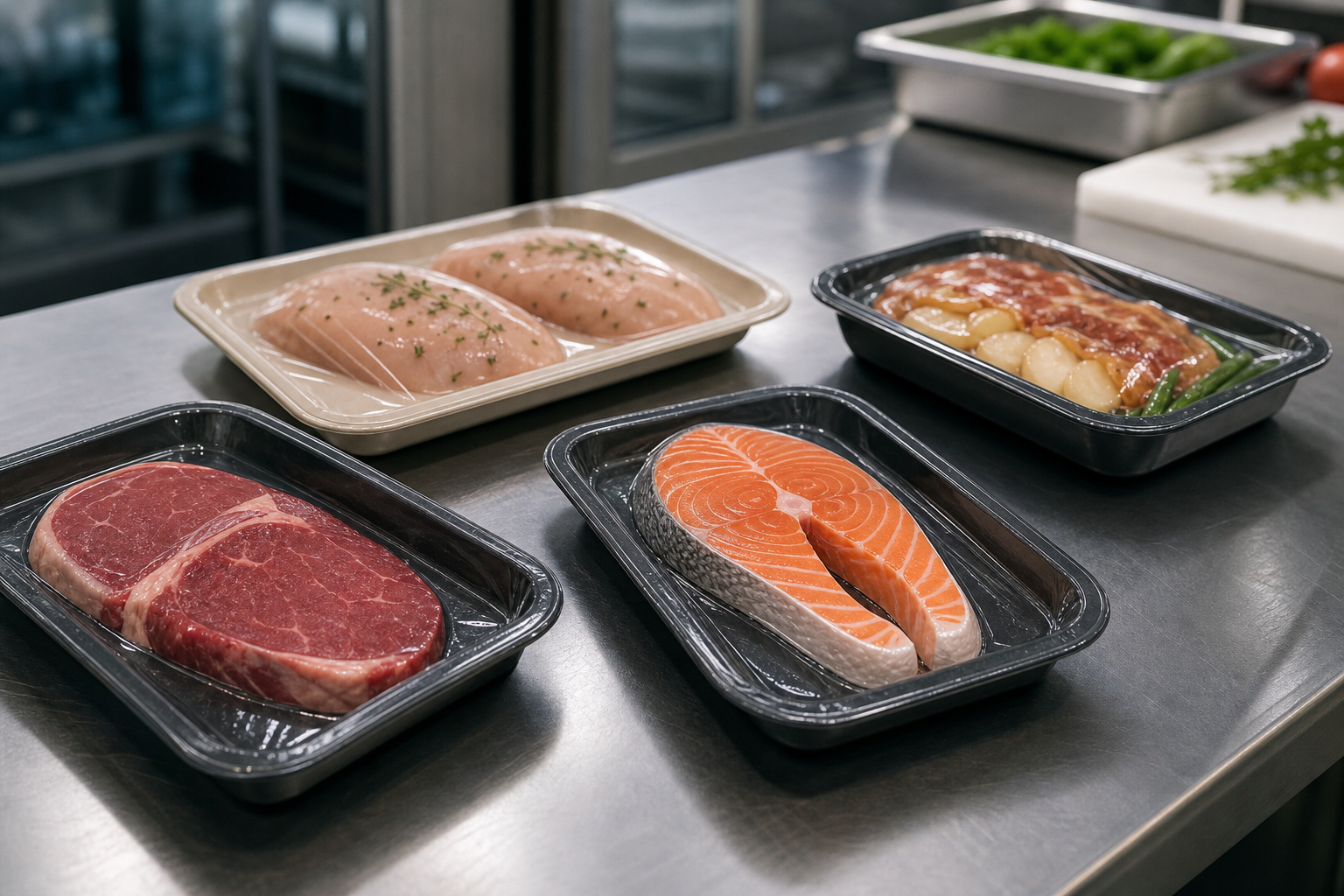
Beef, pork, poultry, and portioned cuts.
Fish, shrimp, and other chilled or frozen seafood.
Evaluate case by case according to the contents, storage method, and heating needs.
REDUCE TRIAL AND ERROR
If you are requesting a quotation or arranging a test, prepare the following information so the film direction and test method can be assessed correctly.
Whether the sealed package can be microwaved and how long the product can be stored depend on the container, film, food preparation, seal quality, storage temperature, and cold chain. They can only be confirmed after testing.
Material, dimensions, height, rim design, and physical samples.
Food type, chilled or frozen state, fat, moisture, and surface condition.
Storage temperature, distribution time, and the shelf-life period to be validated.
Whether microwave use is needed, including expected power, time, and method.
Estimated output, current equipment, and available production space.
FREQUENTLY ASKED QUESTIONS
There is no fixed answer. Food preparation, film barrier, seal quality, storage temperature, and the cold chain all affect the result. Shelf-life testing must use the actual product.
That depends on the complete package design. The heat resistance of the container and film, the food, microwave power, and heating time must be tested together before any claim can be made.
Current information supports chilled or frozen meat, seafood, and prepared foods. Foods with bones, sharp edges, or unusual shapes should be sample-tested first.
Please provide container and film samples, the food type, storage conditions, target shelf life, microwave requirements, estimated output, and current equipment information.
Send the container, food, storage, and heating requirements so we can organize the key test conditions.